Vegas Downpours, Detroit Succession, and a Sub-$25K Hilux Dream: Today in Automotive
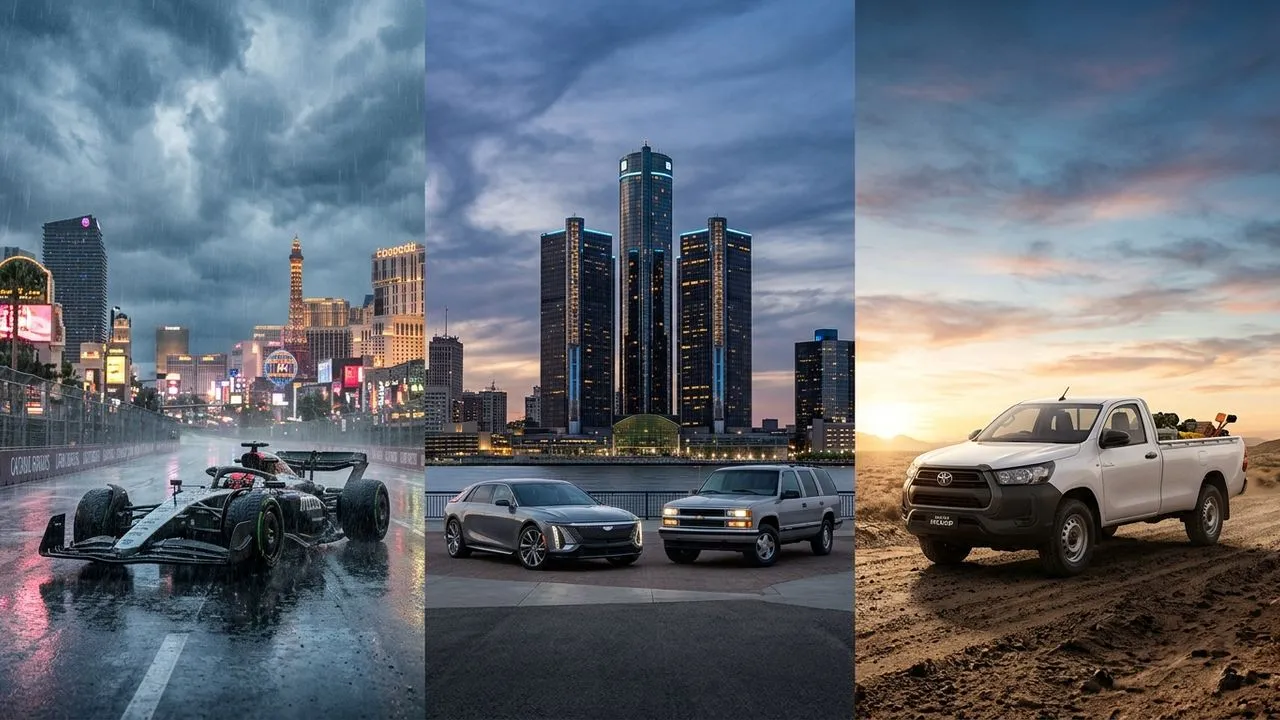
If you woke up expecting the usual predictable Friday rhythm of polished corporate soundbites and meticulous race prep, the motoring gods clearly had other plans today. Out in Nevada, a freak Mojave deluge turned the billion-dollar spectacle of Formula 1 into a damp waiting game, while thousands of miles away in Detroit, quiet rumblings signaled the opening moves of a historic executive transition at General Motors.
Meanwhile, drivers exhausted by skyrocketing showroom sticker prices received an unexpected jolt of optimism from Southeast Asia, where an ambitious private venture is trying to crack the code on bringing a genuinely affordable, utilitarian pickup to American soil. Throw in long-buried Bavarian skunkworks projects and naturally aspirated V10s echoing through the forests of Tasmania, and you get a vivid reminder of just how dynamic this industry remains.
Here is everything you need to know about the defining stories shaping the car world on this Friday, November 20, 2026.
Detroit Prepares for a Changing of the Guard at GM
One of the most consequential eras in American automotive leadership is preparing its next chapter. Reports surfaced today that General Motors has formally initiated succession planning for Chair and CEO Mary Barra. Having held the reins since 2014, Barra has guided the General through catastrophic recall crises, an aggressive corporate restructuring that included exiting European operations, and a multi-billion-dollar commitment to software platforms and Ultium battery technology.
Navigating this pivot hasn't been without friction. As global EV adoption settles into a more measured, hybrid-heavy trajectory in late 2026, GM's board faces a monumental task: identifying a leader who can balance legacy internal combustion profitability with the heavy capital demands of software-defined vehicles and autonomy. While no immediate departure date has been set, the initiation of a search marks the beginning of the end for one of the longest and most transformative CEO tenures in modern automotive history.
The Forbidden Fruit: Can a Thai Firm Bring the Sub-$25K Hilux Champ to the US?
While Detroit contemplates boardroom futures, truck buyers are fixated on a tantalizing prospect emerging from Thailand. An independent automotive firm is reportedly working on a pathway to import the Toyota Hilux Champ—the hyper-utilitarian, modular flat-deck workhorse beloved across developing markets—into the United States for an estimated sub-$25,000 price point.
American truck buyers have watched average transaction prices soar past $60,000, leaving tradespeople, small business owners, and minimalist off-roaders effectively abandoned. The Hilux Champ (derived from Toyota’s IMV 0 platform) strips away digital bloat in favor of hose-out interiors, modular bolt-on rear configurations, and bulletproof mechanicals.
However, the mountain ahead of any independent importer is immense:
* **The 25% Chicken Tax:** The decades-old tariff on imported light commercial trucks remains the ultimate gatekeeper.
* **Federal Motor Vehicle Safety Standards (FMVSS):** Meeting strict US crash-test and active safety requirements will require structural engineering and expensive testing.
* **EPA and CARB Compliance:** The existing global powertrains would likely require adaptation or re-certification to clear stringent American tailpipe limits.
Even if the hurdles prove insurmountable for volume sales, the sheer enthusiasm surrounding the effort sends an unmistakable message to automakers: America is desperate for honest, affordable utility.
Desert Deluge: Las Vegas Grand Prix Practice Washed Out
Formula 1 arrived on the Las Vegas Strip expecting crisp desert nights, tire warm-up challenges, and neon-drenched high speeds. What teams got instead was an uncharacteristic desert downpour that completely halted opening practice.
Because the Las Vegas circuit comprises public roads including Las Vegas Boulevard and Koval Lane, the sudden deluge overwhelmed local surface runoff systems, creating dangerous standing water along the flat-out braking zones. With visibility compromised and aquaplaning risks off the charts, race control was forced to red-flag the session. The disrupted running leaves teams flying blind heading into qualifying, severely limiting data collection on track degradation and thermal degradation along the chilled street surface.
Powertrains, Over-The-Air Upgrades, and Vault Secrets
Beyond the headline-grabbing dispatches, several key developments made waves across the enthusiast and technology spheres today:
* **Ford "Crosspower" Trademark:** Blue Oval filings hint at a new hybrid badge, fueling strong speculation that the next generation of the Ford Ranger will gain an electrified powertrain aimed at balancing heavy payload demands with strict fleet emissions.
* **Polestar 4 Android 15 OTA:** Polestar rolled out a major software revision to Polestar 4 models globally, integrating Android Automotive 15 alongside native Vehicle-to-Load (V2L) capabilities, allowing drivers to power external appliances directly from the battery pack.
* **Audi A8 European Successor Greenlit:** Despite previous signals that the luxury flagship sedan might bow out entirely in favor of electric crossovers, reports from Germany indicate Audi has approved development for a high-tech European successor to carry the executive mantle forward.
* **BMW Reveals the E38 M7 Prototype:** BMW Classic dropped jaws by releasing archival footage and specifications of a long-rumored, one-off E38-generation 7 Series fitted with a bespoke V12 M-division powerplant that never made it to dealer showrooms.
* **Dodge Viper ACR Conquers Targa Tasmania:** Proving that mechanical aggression never goes out of style, a privateer-entered Dodge Viper ACR dominated the grueling tarmac rally stages in Australia, humbling modern turbocharged machinery through sheer aero and ten-cylinder torque.
The Enthusiast's Take: Balance in an Era of Transition
Looking across today's headlines, it is clear that the automotive world is settling into a phase of mature recalibration. The wild speculation of earlier decades has yielded to grounded realities: automakers are recognizing that software updates (like Polestar’s V2L integration) must provide tangible everyday utility, that flagship nameplates still command emotional loyalty, and that buyers are yearning for straightforward vehicles that don't require thirty-year loan terms.
Whether it's an independent dream to bring simple pickups to everyday workers or a legendary V10 tearing up the Tasmanian countryside, cars continue to be far more than mere balance sheets and battery chemistry. As leadership changes loom and weather scrambles the best-laid racing plans, the raw passion running through automotive culture remains as loud and resilient as ever.